


Call Now
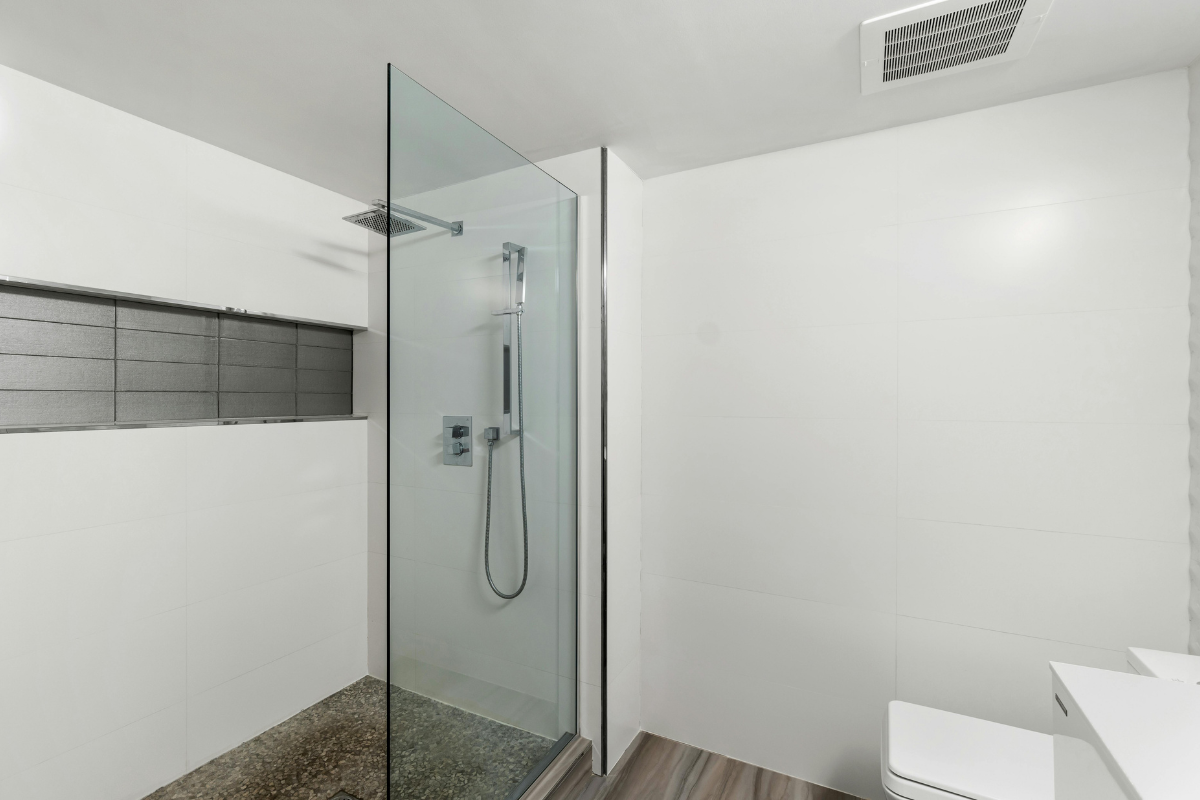
Bathrooms deal with more moisture than almost any other room in the house. Think about it: all those hot showers and baths—not to mention every time you use the sink—create humidity that can linger long after you've left the room. Without proper bathroom ventilation, that excess moisture can lead to mold growth, damaged finishes, poor indoor air quality, and costly repairs.
In California, proper ventilation is required by building code in most situations. So whether you’re planning a bathroom remodel or simply wondering if your existing fan is doing its job, understanding how to improve bathroom ventilation can help protect your investment and create a healthier, more comfortable home.
A properly designed bathroom ventilation system works by exhausting humid air outside before moisture has a chance to settle on surfaces. This helps:
Ventilation is especially important in California homes with premium bathroom finishes; that investment deserves long-term protection.
Ignoring excess moisture can eventually affect nearly every surface in your bathroom, causing the following issues.
In most cases, yes. A ventilation system is not only recommended but required in California for many bathroom projects.
While opening a window can provide some airflow, it doesn't reliably remove moisture in every situation. Mechanical ventilation provides consistent moisture removal regardless of outdoor conditions, protecting tile, paint, cabinetry, and drywall while improving everyday comfort.
California has some of the country's most comprehensive building and energy efficiency standards.
Under California's Title 24 Building Energy Efficiency Standards, bathrooms generally require mechanical ventilation that meets specific performance and efficiency standards. A window alone is typically not sufficient for projects subject to current code requirements.
Modern ventilation fans must meet minimum airflow requirements while also complying with energy efficiency regulations.
One of the biggest installation mistakes is venting a bathroom fan into the attic.
Moisture exhausted into an enclosed attic simply relocates the humidity instead of removing it. Over time, this can cause mold, damaged insulation, wood rot, and roof deterioration.
Bathroom exhaust fans should always discharge outdoors through properly installed ductwork.
Older bathroom fans were often loud and inefficient, but modern models provide powerful ventilation with much quieter operation. Many homeowners barely notice them running.
Today's options also include features such as:
Many combination fixtures include:
These multifunction units reduce ceiling clutter while improving comfort and convenience.
The best bathroom ventilation system depends on your home's layout, roof design, and where the bathroom is located. Common venting options include:
An inline fan is installed in the attic rather than directly in the bathroom ceiling. Because the motor is located farther away, these systems are much quieter.
Ideal for: Larger bathrooms or homeowners looking for a premium, low-noise solution.
With soffit venting, the exhaust duct terminates through the underside of the roof overhang (the soffit).
Ideal for: Homes where roof or wall venting isn't ideal and there’s a soffit nearby.
With roof venting, the duct runs through the attic and exits through a roof cap, allowing moisture to be released safely outside. This option provides great airflow and minimizes the risk of condensation inside the ductwork.
Ideal for: Bathrooms located away from exterior walls or homes where a direct roof route provides the most efficient ventilation.
If the bathroom is located along an exterior wall, the exhaust fan may vent directly through the side of the home. This often requires shorter duct runs, creating better airflow efficiency and simpler installation.
Ideal for: First-floor bathrooms or homes where roof access is more complicated.
When selecting the proper fan for your California bathroom, consider these factors.
Fan capacity is measured in cubic feet per minute (CFM).
As a general rule:
Fan sound is measured in sones.
Look for:
Choosing an energy-efficient exhaust fan can help reduce electricity use without sacrificing airflow. Many newer models are designed to provide powerful ventilation while keeping operating costs low.
Proper duct routing, outdoor vent termination, and code compliance are just as important as selecting the right fan. During a bathroom remodel, a great contractor can ensure the entire system performs efficiently and meets California building requirements.
Bathroom ventilation is one of the most important—but often overlooked—parts of a successful bathroom remodel. An effective ventilation system helps prevent moisture damage, protects your investment, improves indoor air quality, and keeps your bathroom looking beautiful for years to come.
If you're remodeling your bathroom, it's the ideal time to upgrade an outdated exhaust fan or install a modern ventilation system with quieter performance and improved energy efficiency. At True North Kitchen & Bath, we design bathrooms that are as functional as they are beautiful, ensuring every detail—from ventilation to finishes—is built to last.
Together, we can transform your space into your dream bathroom that you and your family will love for years to come. Ready to get started?
Free Consultation.avif)

.avif)
.avif)


