


Call Now
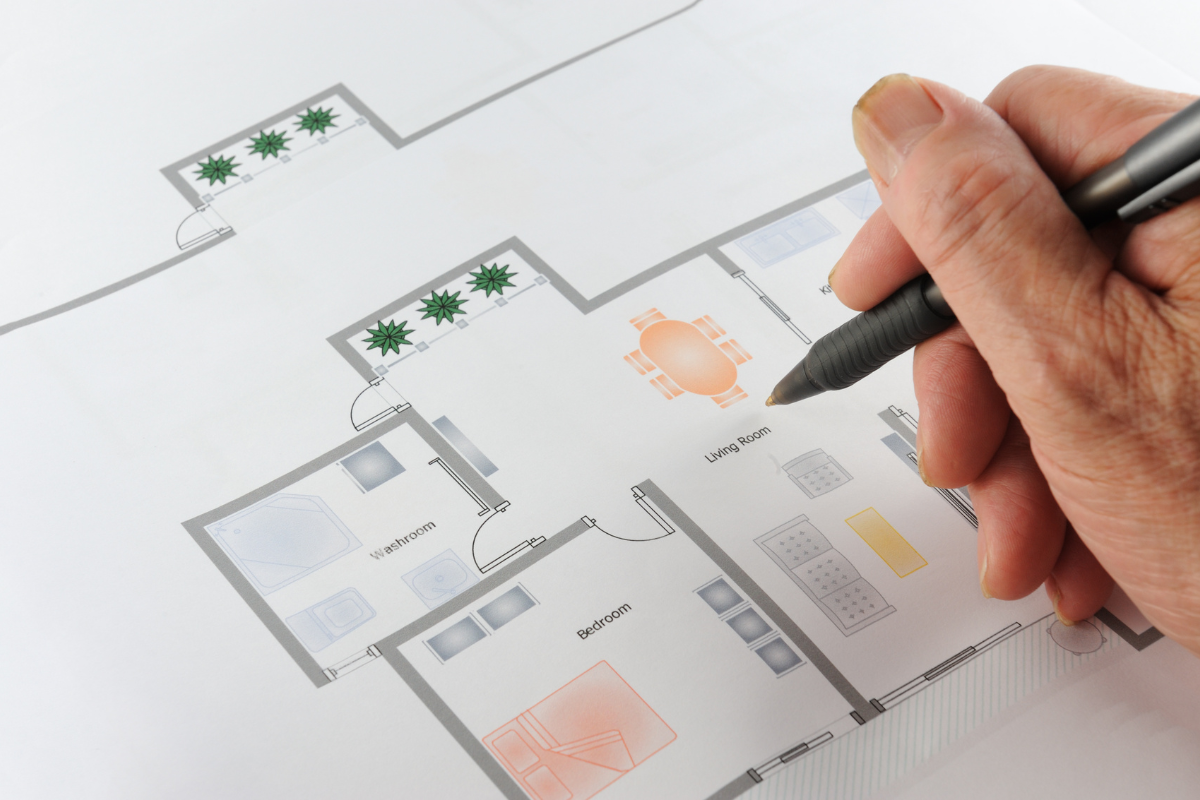
A well-designed bathroom is beautiful, functional, and comfortable. It should be pleasing to the eyes—but it should also make your routine easier and more efficient. That’s why choosing the right layout is one of the most important factors of any bathroom remodel, whether you’re upgrading a compact powder room or creating a luxurious main bathroom. A great floor plan can improve traffic flow, maximize storage, and make the most of every square foot.
From classic full bathroom layouts to modern spa-inspired designs, there are countless bathroom layout ideas to consider. In this guide, we’ll walk through common bathroom floor plans, tips for choosing the best setup for your home, and important considerations to keep in mind before starting your remodel.
Before selecting a layout, it’s important to think about how the bathroom will function and who will use it most often.
The purpose of the bathroom plays a major role in determining the best layout.
Considering who will use your bathroom will help you guide your decisions when it comes to space, storage, and fixture placement.
A bathroom used daily by a busy family will have different needs than one used only occasionally by guests. Consider factors such as:
For example, a shared family bathroom may benefit from a separate vanity area or double sinks to help reduce congestion during busy mornings.
Your layout should support your overall design style. A modern bathroom may prioritize open space and sleek lines, while a traditional layout may include more defined fixture zones and built-in cabinetry.
Not sure what your personal bathroom style preference is? Take our quiz to find out!
Storage is one of the most overlooked aspects of bathroom floor plans. Think about where everyday essentials will go, including towels, toiletries, cleaning supplies, hair tools, and extra toilet paper
Vanities, recessed shelving, linen cabinets, and built-in niches are all great ways to maximize storage without sacrificing floor space.
If you plan to age in place or you have family members with mobility concerns, accessibility should be a priority in your bathroom floor plan. Features like wider doorways, curbless showers, grab bars, and extra clearance around fixtures are vital to comfort and functionality.
Your budget can influence both the size and layout of your bathroom Keeping plumbing fixtures in their existing locations is often more affordable, while moving toilets, showers, or tubs may require additional plumbing and structural work.
Here are some of the most popular bathroom floor plans and where they work best.
.png)
A classic full bathroom is one of the most common bathroom floor plans in homes. It’s popular because it’s a great option for small spaces that doesn’t sacrifice any functionality. This layout is best for small homes, guest bathrooms, and hallway bathrooms.
A traditional full bathroom usually includes:
A typical full bathroom measures about 5 x 8 feet or 5 x 10 feet.
The fixtures are usually arranged in a line along one wall for maximum efficiency.
Remodeling tip: Consider replacing a bulky vanity with a floating vanity or pedestal sink to create a more open feel.
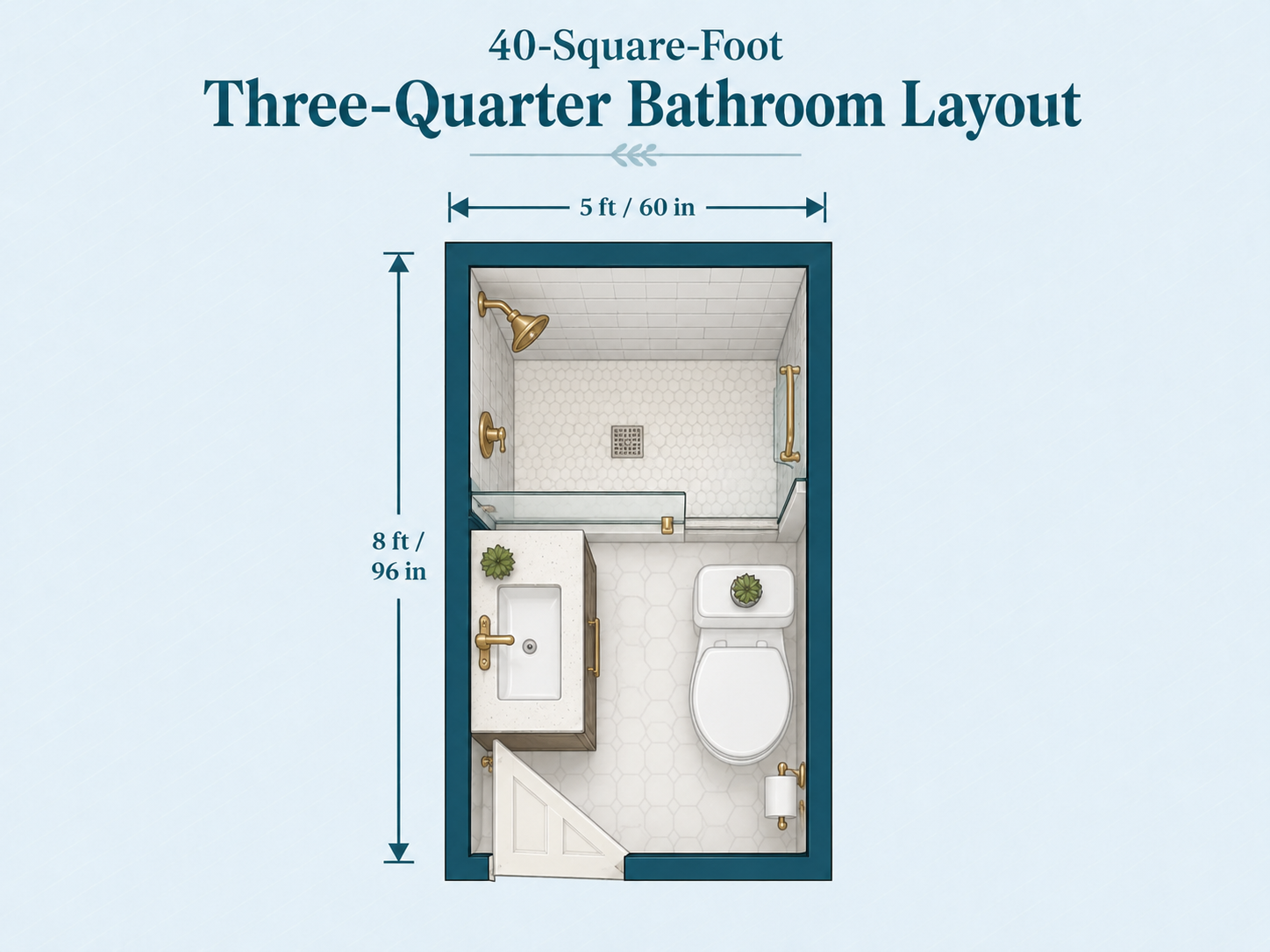
Want full functionality without a bulky bathtub taking up precious space in your bathroom? A three-quarter bathroom layout could be the way to go. Best for guest bathrooms, basement bathrooms, and smaller homes, a three-quarter bathroom includes:
A typical three-quarter bathroom measures about 5 x 8 feet.
Walk-in showers can make the room feel even larger and more modern.
Remodeling tip: Frameless glass shower enclosures help visually open the space.
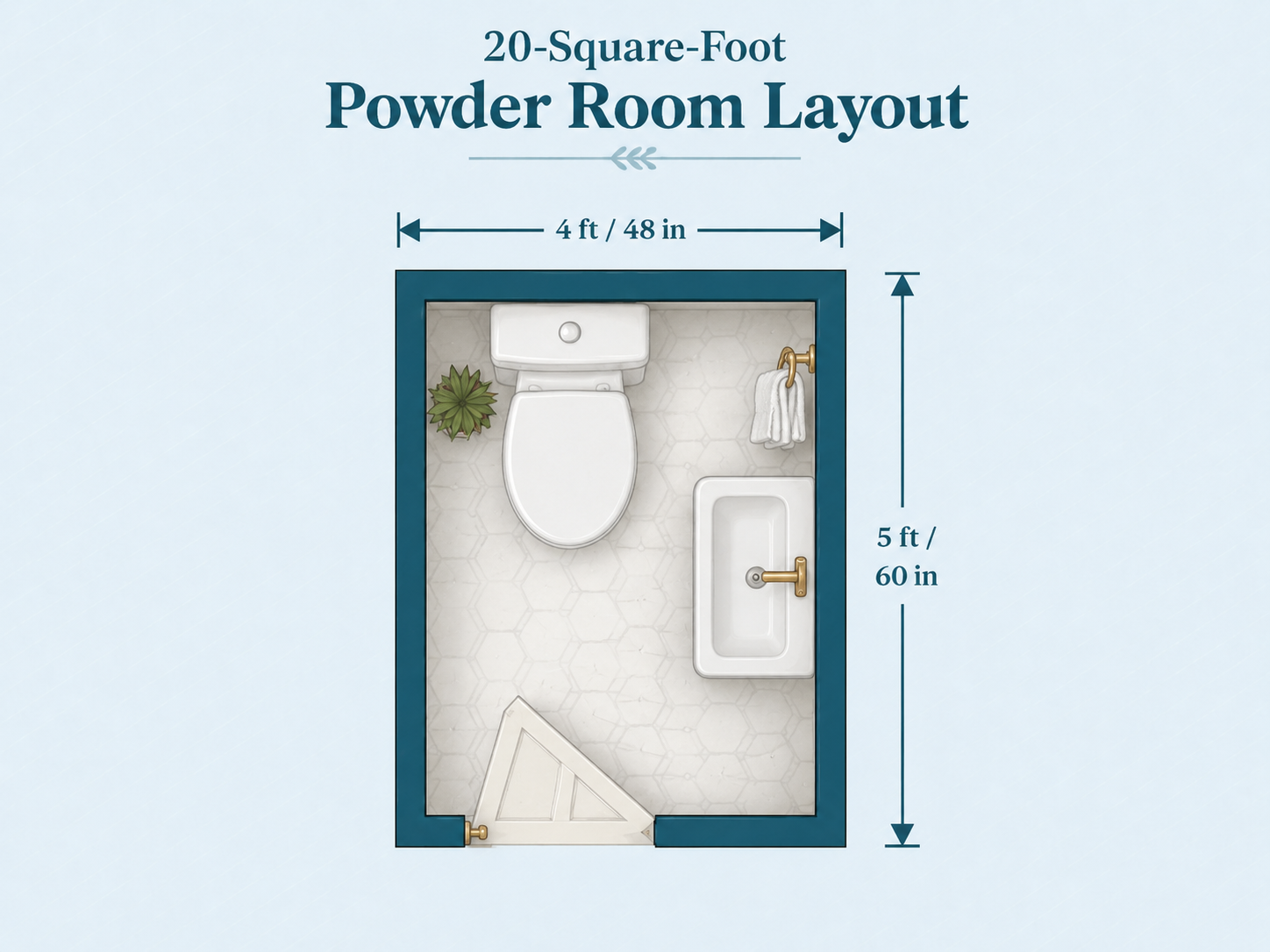
When space is tight and you’re focused on essential functions, a powder room (also known as a half-bath) is a perfect option.
Powder rooms are typically found on main floors or entertaining spaces, offering easy access for guests.
A half-bath includes only:
An average powder room measures about 4 x 5 feet or 5 x 5 feet.
Wall-mounted sinks and pocket doors can help maximize usable space.
Remodeling tip: Because guests frequently use powder rooms, they’re a great place to make a bold design statement with wallpaper, tile, or decorative lighting.
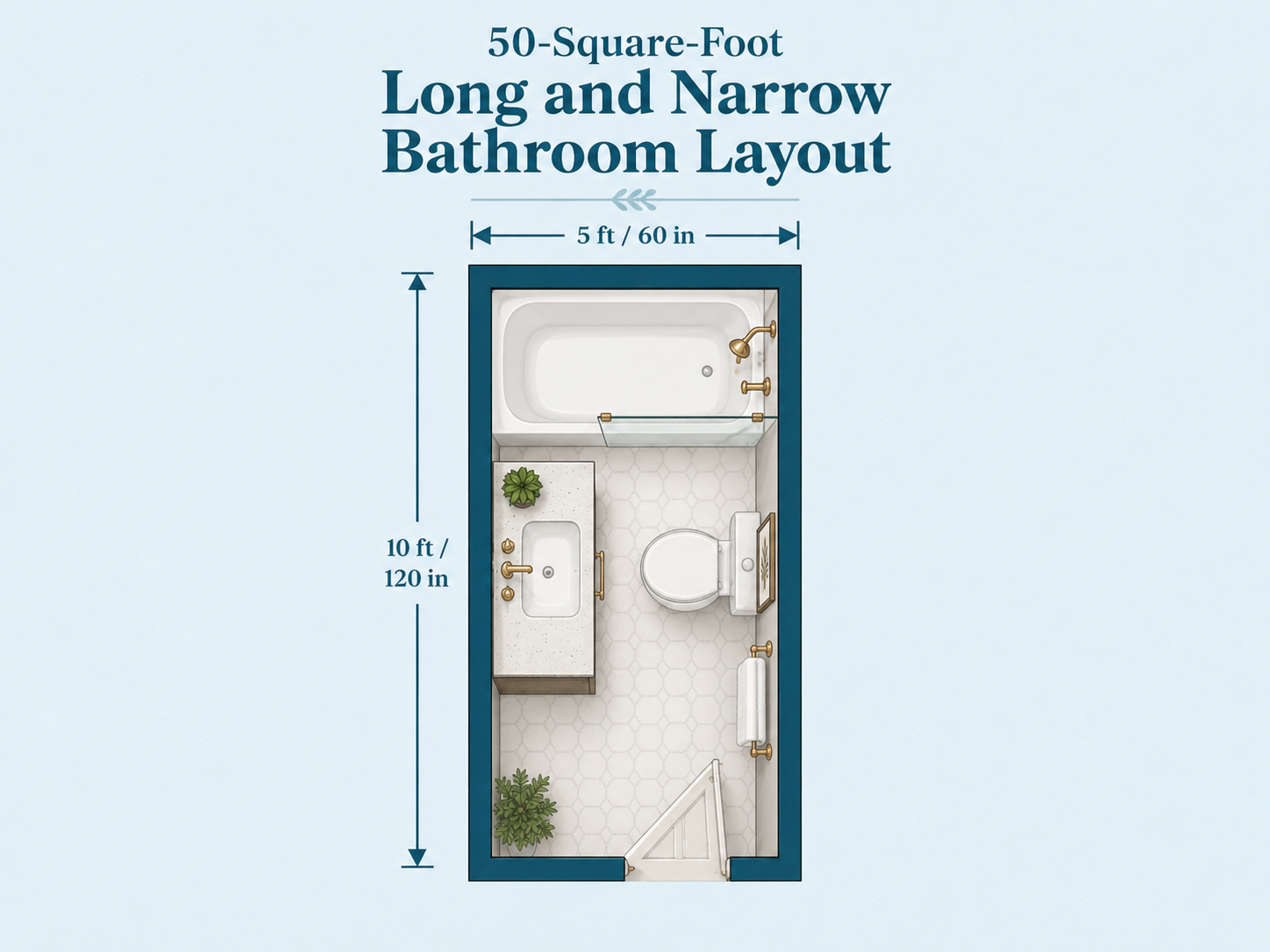
Some bathrooms have limited width but extended length—especially in older homes, narrow additions, and urban houses—which can create design challenges. But that doesn’t mean it can’t work!
To make the best use of long, narrow bathrooms, fixtures are typically arranged in a row along one wall or split between two parallel walls.
The average narrow bathroom room measures about 5 feet wide and 10 feet deep.
Remodeling tip: Use large mirrors and consistent flooring materials to make the room feel wider.
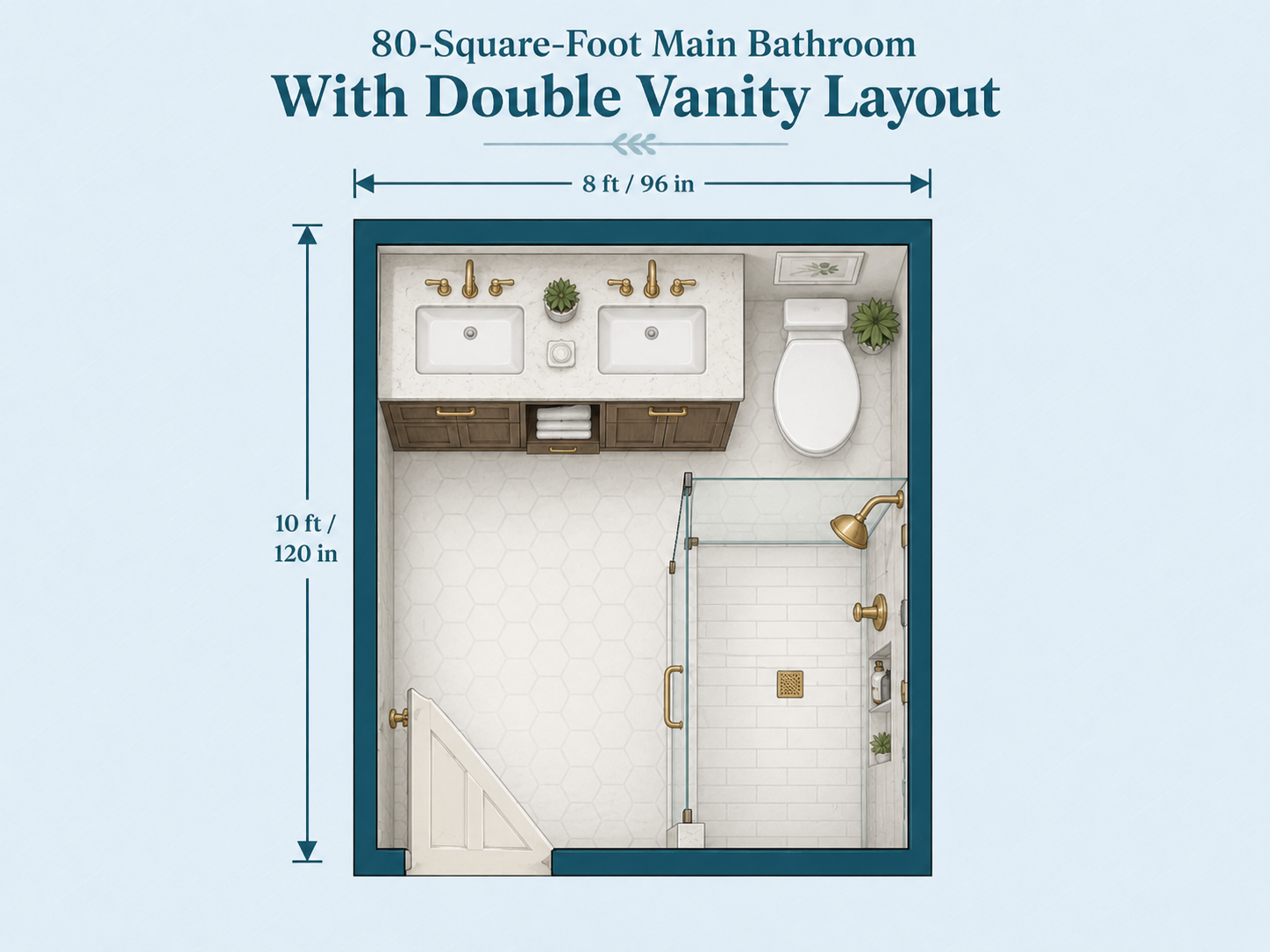
Double vanities are a popular, functional feature in shared main bathrooms. They bring ease to busy mornings—and they add a touch of luxury.
A main bathroom with a double vanity often includes:
An average size for a bathroom with a double vanity measures:
This option is best for couples, shared bathrooms, and family homes
Remodeling tip: Ensure there’s enough clearance between sinks and surrounding fixtures for easier, more comfortable movement.
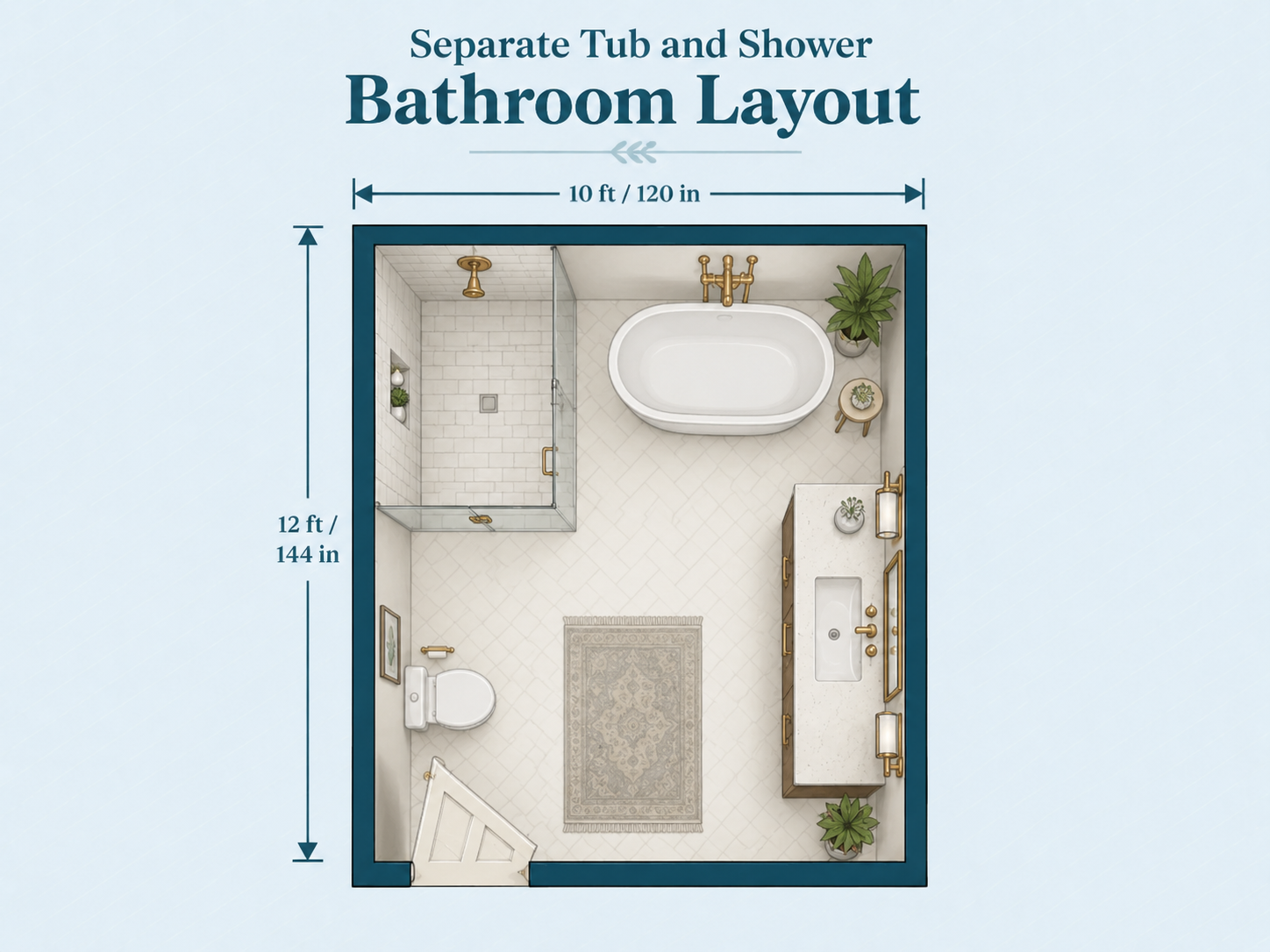
This layout separates the bathtub and shower into distinct zones. A freestanding tub and a walk-in shower in one space is a recipe for a high-end, relaxing atmosphere—and allows for use by multiple people.
The luxurious feel of this combo makes it a great layout for large main bathrooms and spa-inspired bathrooms.
Remodeling tip: If space allows, position the tub near natural light to create a focal point.
Small bathrooms benefit from space-saving features like:
Keeping the layout simple and uncluttered helps maximize functionality.
Learn about small bathroom design ideas!
Guest bathrooms should balance comfort and practicality. A standard full bathroom layout or three-quarter bathroom often works best.
Features to prioritize include:
Kids’ bathrooms need durability and flexibility.
Popular features include:
Separate vanity areas can help multiple children get ready at once.
Learn how to design a kid-friendly bathroom!
Main bathrooms often serve as personal retreats. Larger bathroom floor plans may include:
Prioritizing comfort and long-term functionality is key.
Learn about main bathroom design ideas!
While aesthetics and personal taste matter, bathroom layouts also need to meet building code requirements and spacing guidelines.
General recommendations include:
Local codes can vary, so working with an experienced remodeling contractor helps ensure your bathroom layout meets all requirements.
Designing a bathroom floor plan involves more than simply choosing where fixtures go—and it’s a big task. This is one of the most essential rooms in your home we’re talking about.
Plumbing locations, ventilation, lighting, waterproofing, and structural considerations all impact the final design.
An experienced remodeling contractor can help:
Professional guidance can make a major difference in both the design process and the final result.
Whether you’re updating a compact powder room or creating a luxurious main bathroom, the right bathroom layout can completely transform the space. Thoughtful planning helps improve comfort, storage, efficiency, and overall home value.
At True North Kitchen & Bath, our team helps homeowners create beautiful, functional bathrooms tailored to their needs and lifestyle. From layout planning to final installation, we’re here to help bring your vision to life.
Together, we can transform your space into your dream bathroom that you and your family will love for years to come. Ready to get started?
Free Consultation.avif)

.avif)
.avif)


